
Professional property management is the full operational administration of rental properties on behalf of owners, covering tenant placement, rent collection, maintenance coordination, legal compliance, and financial reporting. This is the industry's standard term for what many investors loosely call "hiring a property manager." The role of professional property management rentals goes far beyond collecting checks each month. It is a structured operating system that protects your asset, keeps units occupied, and shields you from costly legal errors. Property owners who understand this scope make better decisions about when to self-manage and when to outsource.
What does a professional property manager actually do?
Professional property management includes tenant screening, leasing management, rent collection, maintenance coordination, inspections, financial reporting, and compliance enforcement. Each of these functions connects to the others. A vacancy filled with the wrong tenant creates maintenance problems, rent collection failures, and potential eviction costs down the line.
The day-to-day responsibilities break down into five core areas:
- Tenant marketing and screening. Managers advertise vacancies, collect applications, run background and credit checks, and verify income. Systematic screening reduces the risk of placing tenants who default or damage the property.
- Lease preparation and enforcement. Managers draft leases, execute move-ins, document property condition, and handle violations. When a tenant breaches the lease, the manager follows a documented process through warnings, notices, and eviction if necessary.
- Rent collection and financial reporting. Managers collect rent, manage late fees, and provide owners with monthly income statements and annual summaries. This paper trail is critical for tax preparation and investment analysis.
- Maintenance and repairs. Work-order systems with licensed vendors, documented inspections, and emergency protocols keep the property in good condition and reduce owner liability. A manager with an established vendor network gets faster service at better rates than most individual owners can negotiate.
- Legal and compliance management. Managers track Fair Housing Act requirements, local landlord-tenant laws, and habitability standards. They apply these rules consistently across every tenant interaction.
Pro Tip: Ask any property manager you interview to walk you through their exact work-order process, from tenant request to vendor invoice. Vague answers signal reactive management rather than a documented system.
The difference between a good manager and a mediocre one shows up in the systems, not the personality. Consistent leasing, maintenance, documentation, and reporting deliver reliable performance. Reactive issue handling does not.

How do property management fees actually work?
Full-service management fees commonly range from 8% to 12% of monthly rent, with additional leasing and add-on fees that vary by contract and region. That headline percentage is rarely the full picture.
| Fee Type | Typical Range | What It Covers |
|---|---|---|
| Monthly management fee | 8%–12% of collected rent | Day-to-day oversight, rent collection, reporting |
| Leasing or placement fee | 50%–100% of one month's rent | Tenant marketing, screening, and lease execution |
| Inspection fee | $75–$150 per visit | Move-in, move-out, and periodic property checks |
| Maintenance markup | 10%–20% above vendor invoice | Coordination and oversight of repair work |
| Lease renewal fee | $100–$300 flat | Renewal negotiation and documentation |
The monthly percentage looks affordable until you add leasing fees, inspection charges, and maintenance markups. Total effective cost, including all add-ons, can be substantially higher than the base rate suggests. A $1,500 per month rental at 10% management costs $150 per month in base fees. Add a leasing fee of one month's rent every 12 months and two inspections per year, and the annual cost climbs well above $2,000.
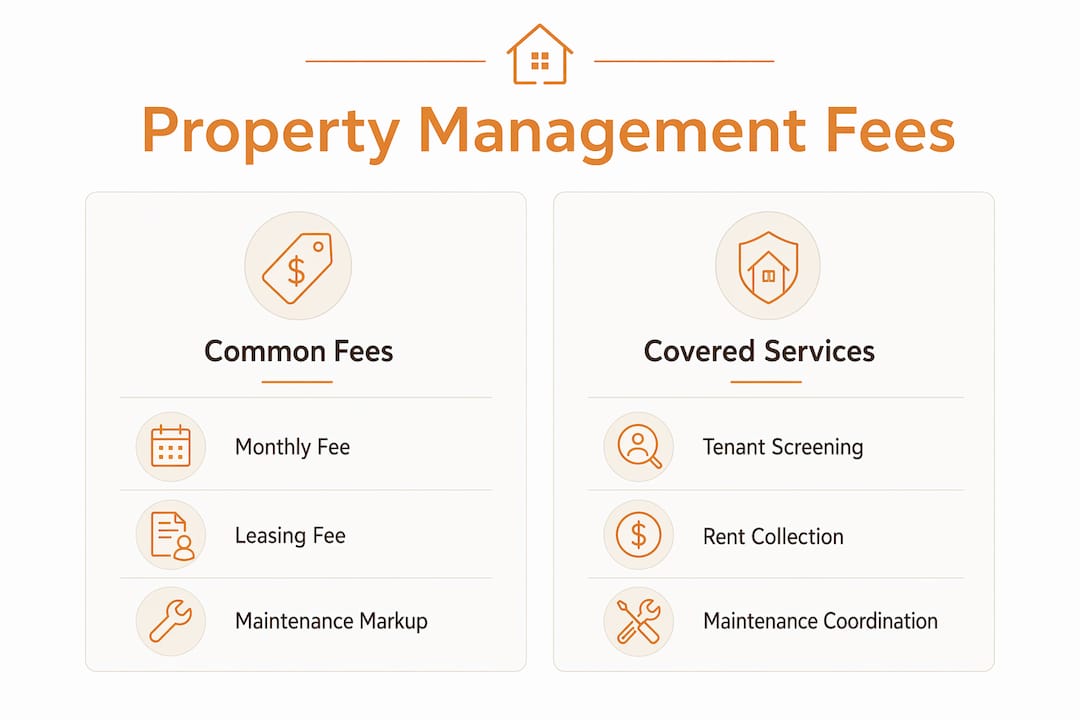
Percentage-based models align the manager's income with your rental income, which creates an incentive to keep the unit occupied. Flat-fee models offer predictability but can reduce urgency to fill vacancies quickly. Neither model is universally better. The right choice depends on your property's rent level and how often you expect turnover.
Pro Tip: Request a full fee schedule in writing before signing any contract. Compare the total annual cost across multiple providers, not just the monthly percentage.
Owners should evaluate the full scope of management costs including leasing, inspections, and maintenance premiums when selecting providers. The manager charging 8% with high add-on fees often costs more than the one charging 12% with a simpler structure.
What legal responsibilities do property managers carry, and what stays with you?
Fair Housing Act compliance requires ongoing operational processes, documented procedures, and trained staff to manage advertising, screening, and lease enforcement legally. Legal exposure includes federal jurisdiction cases with potential damages, injunctions, and attorney fees. This is not a theoretical risk. Fair Housing complaints are filed against landlords and managers every year, and inconsistent application of screening criteria is one of the most common triggers.
Property managers assume operational legal duties, but they do not absorb your statutory obligations. Owners retain legal responsibilities under federal and state landlord-tenant law even when they delegate day-to-day tasks. The agency contract transfers authority to act on your behalf. It does not transfer your underlying liability as the property owner.
The practical implications for owners are significant:
- You remain responsible for habitability standards under state law, regardless of who manages the property.
- You are liable for Fair Housing violations if your manager acts on discriminatory instructions you provide.
- You must carry adequate landlord insurance even when a management company holds its own coverage.
- You are accountable for tax obligations on rental income, even if the manager handles collection.
Good intentions in compliance are not sufficient. Documented, consistent operations across every tenant interaction are what protect you in a dispute or lawsuit. Ask your manager how they document screening decisions and lease enforcement actions. If the answer is vague, your legal exposure is higher than you realize.
In 2026, technology and AI are increasingly used in tenant screening processes. Audit-ready documentation and human accountability remain critical despite automation. Algorithmic screening tools can introduce bias if not monitored, and the Fair Housing Act applies regardless of whether a human or a software system made the decision.
How does professional management compare to self-managing your rental?
Professional rental management pays for itself when you account for all the costs self-management actually carries. Most owners who self-manage underestimate three things: the time cost, the vacancy cost, and the legal risk cost.
- Vacancy reduction. Professional managers fill units faster because they have active marketing channels, pre-qualified applicant pools, and dedicated leasing staff. Every week a unit sits vacant is direct income loss.
- Eviction risk reduction. Thorough screening reduces the probability of placing a non-paying tenant. A single eviction in Texas costs $3,000–$5,000 in legal fees, lost rent, and property turnover. That alone can exceed a full year of management fees.
- Time savings. Managing a single rental property takes an average of several hours per week when you account for tenant communication, maintenance coordination, and bookkeeping. That time has real value.
- Legal error avoidance. Self-managing owners who are unfamiliar with Fair Housing requirements, security deposit rules, or notice periods face fines and lawsuits that dwarf any fee savings.
- Vendor network access. Established managers have relationships with licensed plumbers, electricians, and HVAC contractors. They get faster response times and better pricing than individual owners calling cold.
"Professional management acts as the operational system behind rentals, emphasizing consistent leasing, maintenance, documentation, and reporting to deliver reliable performance. Value derives from process consistency rather than reactive issue handling." — YourProPropertyManagement
The break-even point for professional management includes avoided vacancy loss, eviction costs, and legal penalties alongside fee expenses. For most owners with one to five units, professional management is cost-neutral or better when all avoided costs are counted. For owners with six or more units, the operational complexity makes self-management genuinely unsustainable without hiring dedicated staff, which costs more than a management fee anyway.
Owners who benefit most from professional rental management are those who own properties in markets where they do not live, those with multiple units, and those whose time is better spent acquiring additional properties than managing existing ones.
Key takeaways
Professional property management is the operational system that protects rental income, reduces legal exposure, and preserves asset value through consistent processes, documented procedures, and vendor relationships.
| Point | Details |
|---|---|
| Full-service scope | Managers handle screening, leasing, rent collection, maintenance, compliance, and reporting. |
| Fee transparency | Total annual cost includes leasing fees, inspection charges, and maintenance markups beyond the base percentage. |
| Legal responsibility split | Managers carry operational duties; owners retain statutory obligations under federal and state law. |
| Break-even reality | Avoided vacancy, eviction, and legal costs typically offset management fees for most rental owners. |
| System over personality | Consistent documented processes, not individual responsiveness, define effective management. |
What I've learned about property management that most articles won't tell you
Most owners approach property management as a cost. The ones who build successful rental portfolios treat it as infrastructure. That shift in thinking changes every decision that follows.
The most common mistake I see is owners hiring a manager to reduce stress, then micromanaging every decision. That defeats the purpose and degrades the manager's ability to run consistent processes. If you hire a professional, define your approval thresholds clearly and then step back. Require monthly reports, review them, and intervene only when something falls outside agreed parameters.
The second mistake is evaluating managers on personality rather than systems. A charming manager with no documented screening criteria is a liability. A less personable manager with a repeatable work-order process, a written vendor list, and a Fair Housing training log is an asset. Ask to see the actual documents before you sign.
Technology is changing the field in 2026, but not in the way most owners expect. AI screening tools and automated rent collection are useful. They are not substitutes for human judgment in lease enforcement or maintenance decisions. The best managers use technology to handle volume and use human oversight to handle complexity. That balance is what you are paying for.
Finally, vetting your property manager with the same rigor you apply to tenant screening is non-negotiable. Check their license, their references, and their complaint history with your state's real estate commission. A bad manager costs more than no manager.
— Michael
How 539Rentals approaches full-service rental management in Houston

539Rentals manages a portfolio of luxury short-term rental properties across Houston's most active neighborhoods, including Rice Military, Montrose, and Midtown. Every property in the 539Rentals portfolio operates under the same professional management principles covered in this article: documented screening, coordinated maintenance, legal compliance, and transparent owner reporting. The result is consistent occupancy and protected asset value for property owners who want professional oversight without the operational burden.
Owners and investors looking for a managed luxury rental in Houston can review 539Rentals' full portfolio and direct booking options at 539rentals.com. Properties range from 3-bedroom townhomes to 16-bedroom multi-home packages, all professionally maintained and available for direct booking at rates up to 20% below third-party platform pricing.
FAQ
What is the role of professional property management in rentals?
Professional property management covers all operational functions of a rental property on behalf of the owner, including tenant screening, leasing, rent collection, maintenance coordination, legal compliance, and financial reporting. Its core purpose is to maintain occupancy, protect the asset, and reduce owner liability.
What do property management fees typically include?
Full-service management fees typically range from 8% to 12% of monthly rent, plus separate leasing fees of 50%–100% of one month's rent, inspection fees, and maintenance markups. Always request a complete fee schedule to calculate total annual cost.
Does hiring a property manager remove my legal liability as an owner?
No. Owners retain statutory landlord obligations under federal and state law even when a manager handles day-to-day operations. The management agreement transfers operational authority, not legal responsibility.
When does professional management pay for itself?
Professional management typically breaks even or delivers net savings when you account for avoided vacancy loss, eviction costs, and legal penalties alongside the fee expense. Owners with multiple units or out-of-market properties benefit most.
How do I evaluate a property management company before hiring?
Verify the manager's state real estate license, request references from current clients, review their documented screening and maintenance processes, and check their complaint history with your state's real estate commission. Systems and documentation matter more than sales presentations.