
Airbnb is a peer-to-peer marketplace connecting travelers with individual hosts for short-term stays, while a private rental company professionally manages its own portfolio of properties to deliver consistent, hotel-like accommodation. Understanding the airbnb vs private rental company distinction matters because the wrong choice can cost you hundreds of dollars, leave you without support at midnight, or land you in a property that looks nothing like its photos. Both models have real strengths. The gap between them is wider than most travelers realize, and knowing exactly where each one excels will save you time, money, and frustration before you ever pack a bag.
How do Airbnb and private rental companies differ in pricing?
Pricing is where the two models diverge most sharply, and where travelers most often get surprised. Airbnb's total cost includes a nightly rate set by the host, a cleaning fee, and a service fee charged by the platform itself. According to NerdWallet's 2022 analysis, Airbnb cleaning fees average $75 per booking, which hits hardest on short stays. That same analysis found that 7-night Airbnb stays were 32% cheaper per night than one-night stays once cleaning fees were spread across the booking. The math is simple: the shorter your trip, the worse the value proposition on Airbnb.
Private rental companies typically price differently. Many offer fixed or staff-managed rates with fewer add-on fees, so the price you see at checkout is closer to the price you actually pay. Some operators do use dynamic pricing tied to demand and local events, but the structure is more transparent than Airbnb's layered fee system.
Here is what to compare before booking either option:
- Nightly base rate: The headline number, which rarely reflects true cost on Airbnb
- Cleaning fee: Often $50 to $150 on Airbnb; frequently bundled into the rate at private rental companies
- Platform or service fee: Airbnb adds 14% to 16% on top of the host's price; private rental companies booking direct charge nothing extra
- Security deposit: Variable on Airbnb; standardized at most private rental companies
- Total cost per night after all fees: The only number that actually matters
Pro Tip: Always build a spreadsheet comparing total all-in costs across options, not just nightly rates. For a two-night stay, Airbnb fees can add 40% or more to the base price. For a ten-night stay, that same Airbnb listing may be the better deal.
Travelers who manage their rental budget carefully know that the nightly rate is just the starting point. Total cost, including every fee, is the only honest comparison.
What are the differences in service quality and guest experience?
Service quality is the starkest difference between the two models, and it comes down to one word: consistency. Airbnb experiences vary widely because each property is managed by an individual host with their own standards, availability, and communication style. One host may respond within minutes and leave a welcome basket. The next may take six hours to answer a question about the Wi-Fi password. You are booking a person as much as a property.
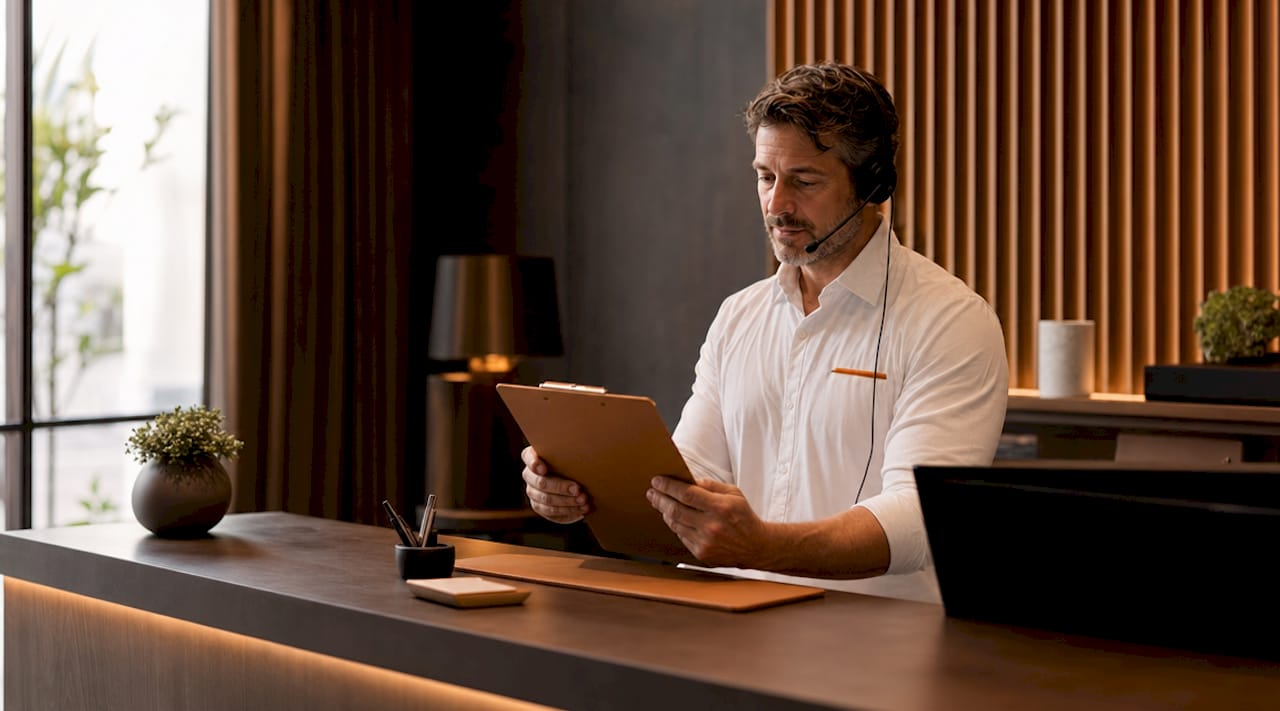
Private rental companies operate more like boutique hotels. Professional operators standardize cleaning protocols, guest communication, and maintenance response times across their entire portfolio. When something breaks at 11 p.m., there is a dedicated team to fix it, not a single host who may or may not be awake.
The practical differences show up in four specific areas:
- Check-in process: Private rental companies use keyless entry systems and provide clear, tested instructions. Airbnb check-in depends entirely on the host's setup, which ranges from seamless to chaotic.
- Cleaning standards: Professional operators follow documented cleaning checklists. Individual Airbnb hosts set their own bar.
- Problem resolution: A private rental company has staff. An Airbnb host has goodwill and a platform dispute process.
- Guest communication: Private rental companies offer 24/7 support as a standard feature. Airbnb hosts offer whatever their schedule allows.
Pro Tip: Before booking any Airbnb, read the one-star and two-star reviews specifically. They reveal the host's real response to problems, not just the property's best-case experience.
The hotel-level service that private rental companies target appeals most to travelers who cannot afford a bad experience. Business travelers, families with young children, and guests attending time-sensitive events fall squarely into that category.
Which option fits your trip type and traveler profile?
The honest answer is that neither model is universally better. The right choice depends on what you actually need from your stay. Here is how different traveler profiles map to each option:
- Solo travelers and couples seeking local flavor: Airbnb wins here. A one-bedroom apartment in a residential neighborhood, hosted by someone who lives nearby, delivers an authentic local experience that no managed property can fully replicate.
- Business travelers on extended assignments: Private rental companies are the clear choice. Business travelers need reliable Wi-Fi, professional-grade workspaces, consistent cleaning, and guaranteed check-in times. Variability is a liability, not a feature.
- Large groups and family reunions: Private rental companies that offer multi-bedroom packages have a structural advantage. Booking three separate Airbnb listings for a group of 20 creates three sets of check-in logistics, three different cleaning standards, and three hosts to coordinate with.
- Short weekend trips: Hotels and private rental companies with transparent flat-rate pricing often beat Airbnb on total cost for stays under three nights, once cleaning and service fees are factored in.
- Long stays of seven nights or more: Airbnb becomes more competitive as the cleaning fee gets amortized across more nights. Private rental companies offering weekly or monthly rates can still match or beat Airbnb on price while adding service consistency.
- Corporate relocation and transitional housing: Private rental companies built for mid-term stays offer furnished properties, flexible lease terms, and the stability that Airbnb's short-term model cannot provide.
Trip length is the single most underrated factor in this decision. A two-night bachelorette party and a two-week corporate assignment require completely different accommodation logic.
How does management structure affect reliability and booking experience?
Behind every booking is an operational model that determines what happens when things go wrong. Airbnb hosts self-manage or use co-hosts, which creates variable reliability across the platform. Some hosts run their listings like professionals. Others treat it as a side income and respond accordingly. The platform itself provides a dispute resolution process, but resolution is slow and outcomes are inconsistent.
Private rental companies use centralized management infrastructure. Maintenance is scheduled, not reactive. Cancellation policies are standardized across the portfolio. Regulatory compliance, including local short-term rental permits, is handled by the company rather than left to individual owners.
| Feature | Airbnb | Private rental company |
|---|---|---|
| Cancellation policy | Set by individual host, varies widely | Standardized across all properties |
| Maintenance response | Depends on host availability | Dedicated staff, defined response times |
| Regulatory compliance | Host's responsibility | Company-managed |
| Booking guarantee | Platform-mediated | Direct company accountability |
| 24/7 guest support | Not guaranteed | Standard feature |
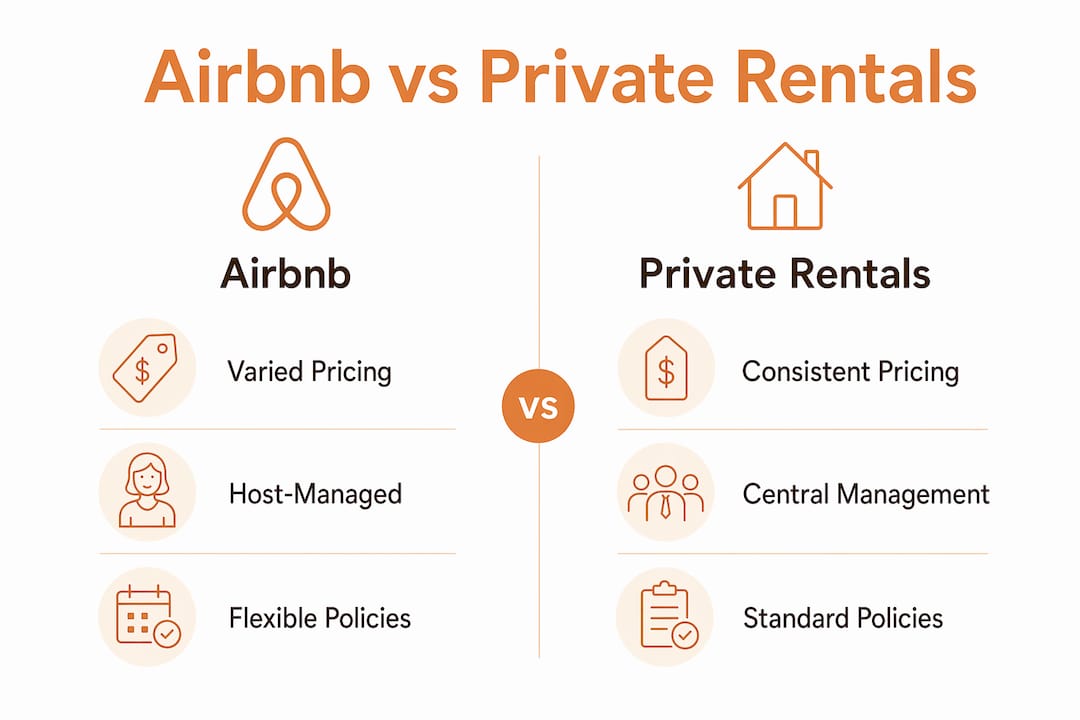
The operational gap matters most when something unexpected happens. A burst pipe, a noise complaint, or a last-minute cancellation by a host reveals exactly how much infrastructure is behind your booking. Automation tools like dynamic pricing software and automated guest messaging have helped close this gap for professional Airbnb hosts, but the structural difference between one person and a dedicated team remains significant.
What are the current trends shaping both models?
The short-term rental market is changing fast, and both models are under pressure to adapt. Several trends are reshaping how travelers experience both Airbnb and private rental services in 2026.
- Regulatory tightening: Cities including New York and San Francisco have imposed strict limits on short-term rental operations, capping permits and banning unhosted stays in some zones. This reduces Airbnb supply in major markets and pushes prices up for the listings that remain.
- Professionalization of the market: Property management firms are acquiring and managing Airbnb-listed properties at scale, blurring the line between individual hosts and private rental companies. The result is a growing middle tier of professionally managed listings on peer-to-peer platforms.
- Hybrid mid-term rental models: Operators targeting traveling professionals with stays of 30 to 90 days are combining Airbnb's flexibility with private rental companies' service standards. This hybrid approach is growing fastest in cities with large medical, corporate, and academic traveler populations.
- Direct booking growth: Travelers are increasingly booking directly with private rental companies to avoid platform fees. Direct bookings eliminate the Airbnb service fee entirely, which can represent 14% to 16% of the total booking cost.
- Automation closing the service gap: Tools handling guest communication, cleaning scheduling, and pricing are making individual Airbnb hosts more reliable. The gap between a well-run Airbnb and a private rental company is narrowing for tech-savvy hosts, though it has not closed entirely.
Staying informed about local regulations in your destination city is now a practical necessity. A listing that exists today may not be available next month if a city tightens its short-term rental rules.
Key takeaways
Private rental companies deliver more consistent service and transparent pricing, while Airbnb offers greater variety and competitive rates for longer stays of seven nights or more.
| Point | Details |
|---|---|
| Fee structure matters | Always calculate total all-in cost; Airbnb cleaning and service fees can add 40% to short-stay prices. |
| Service consistency | Private rental companies provide standardized cleaning, 24/7 support, and defined maintenance response times. |
| Trip type drives the choice | Business travelers and large groups benefit most from private rental companies; solo travelers seeking local flavor may prefer Airbnb. |
| Regulatory risk is real | Airbnb availability in cities like New York and San Francisco is shrinking due to permit caps and short-term rental bans. |
| Direct booking saves money | Booking directly with a private rental company eliminates platform fees and often unlocks better rates and flexible terms. |
What I've learned from watching travelers make this choice
After years of observing how travelers navigate accommodation decisions, one pattern stands out: most people anchor on the nightly rate and ignore everything else. They see a $120 Airbnb listing and compare it to a $180 private rental rate without doing the full math. When you add a $90 cleaning fee and a $40 service fee to that Airbnb, the two-night total flips. The private rental wins on price and delivers better service.
The second mistake I see constantly is booking based on photos alone. Airbnb photos are taken by hosts who have every incentive to make a space look larger and cleaner than it is. Private rental companies with professional photography and consistent interior standards are more likely to deliver what you see. That is not a knock on Airbnb as a platform. It is a structural reality of who controls the listing.
My honest recommendation is this: if your trip has any element of professional obligation, group coordination, or time sensitivity, book a private rental company. The reliability premium is worth every dollar. If you are a solo traveler or a couple with flexibility and a sense of adventure, Airbnb's variety is genuinely hard to beat. The key is matching the model to the trip, not defaulting to whichever platform you used last time.
One more thing worth saying: read the cancellation policy before you book anything. A non-refundable Airbnb booking that gets canceled by the host three days before your trip is a nightmare with no clean resolution. A private rental company with a clear, standardized cancellation policy gives you a known outcome either way.
— Michael
Experience the difference with 539Rentals in Houston
If you are planning a trip to Houston and want the reliability of a professionally managed property without the unpredictability of a peer-to-peer listing, 539Rentals is built for exactly that.
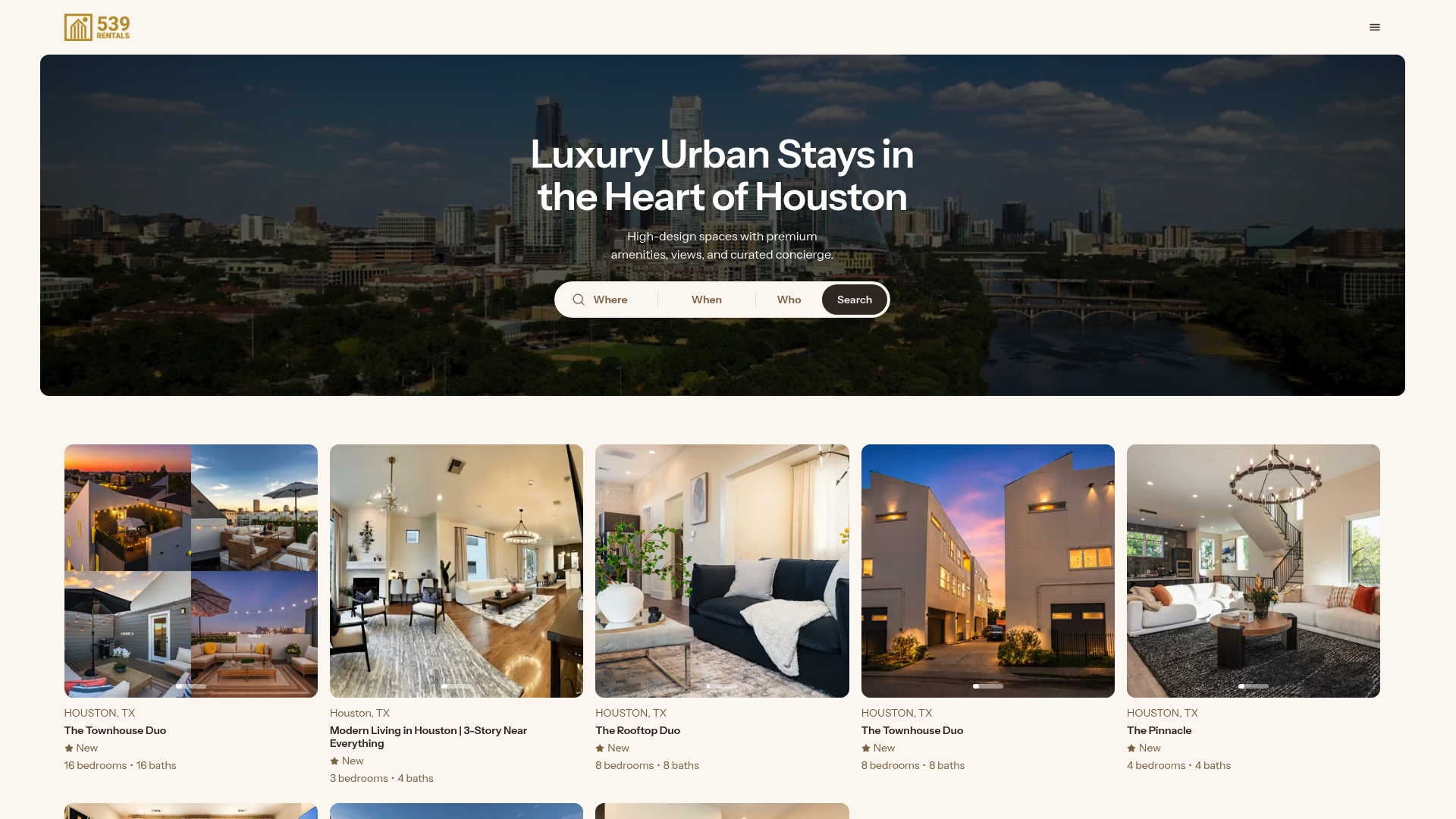
539Rentals offers a portfolio of luxury Houston stays ranging from stylish 3-bedroom townhomes to 16-bedroom multi-home packages sleeping up to 40 guests. Properties like The Pinnacle, The Eterne, and The Onyx come with private rooftop terraces, chef-ready kitchens, keyless entry, and 24/7 guest support. For professionals on assignment, the corporate housing program offers fully furnished, managed residences near the Texas Medical Center, Rice Military, and Downtown Houston. Book directly at 539rentals.com and save up to 20% compared to third-party platform rates.
FAQ
What is the main difference between Airbnb and a private rental company?
Airbnb is a marketplace where individual hosts list their properties for short-term rental, while a private rental company owns or manages its portfolio directly and delivers standardized, hotel-like service across all properties.
Is Airbnb cheaper than booking with a private rental company?
It depends on trip length. For stays of seven nights or more, Airbnb can be cost-competitive once cleaning fees are amortized. For short stays of one to three nights, private rental companies with flat-rate pricing are often the more economical option.
Which option is better for business travelers?
Private rental companies are the stronger choice for business travelers. They offer consistent amenities, guaranteed check-in processes, 24/7 support, and the reliability that professional travel demands. Many also offer dedicated corporate housing with flexible mid-term lease options.
Are there risks to booking Airbnb that don't apply to private rental companies?
Yes. Airbnb hosts can cancel bookings, and regulatory changes in cities like New York and San Francisco have reduced listing availability. Private rental companies carry their own cancellation policies and manage regulatory compliance at the company level, reducing those risks for guests.
Can I save money by booking a private rental company directly?
Booking directly with a private rental company eliminates platform service fees, which Airbnb charges at 14% to 16% of the booking total. Direct bookings with companies like 539Rentals can save guests up to 20% compared to booking through third-party platforms.